
Adrian Jones
|
Hi Akile
Earlier today, the Greenback remained under pressure after disappointing first quarter U.S. economic growth. This left Sterling, the Yen and the Aussie at multi-week highs.
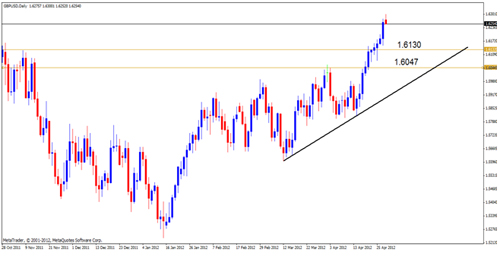
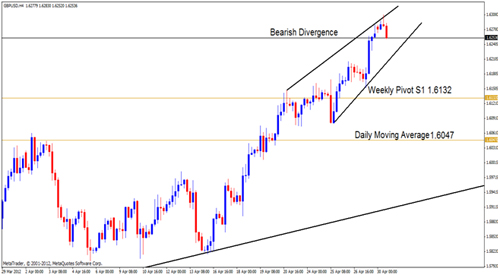
The Dollar touched levels not seen since late February. It fell as low as 80.25 Yen, while Sterling stood at $1.6276, following an 8 month peak of $1.6280 hit on Friday.
With Japan closed for a public holiday today and most of Asia shut on Tuesday for the May Day holiday, trading in Asia is expected to be subdued.
On Friday, data had shown that U.S. economic growth slowed in the first quarter. This was partly as a result of businesses cutting back on investment and this has strengthened the Federal Reserve's case that interest rates should be kept near zero, at least through late 2014.
Market expectations now persist that this indeed will be the case, notwithstanding that more bond buying or quantitative easing (QE) is not on the cards just yet. The result is that the Dollar will likely be driven lower and risky assets higher.
Despite Britain's double-dip recession, this gives a partial explanation of why Sterling has outperformed the Greenback. Many analysts are now of the view that Sterling's fortunes appear to have turned a corner and as a result, currency speculators seem now to expect further gains.
The Reserve Bank of Australia is expected to push forward with at least a 0.25% interest rate cut on Tuesday. Australian economic growth is running below Trend, while key sectors of its economy such; as retailing, housing and manufacturing, are struggling and the jobs market remains weak.
The Australian Dollar weakened versus most of its 16 major counterparts. Even so, the Dollar lost ground against the Aussie and earlier the Aussie stood at $1.0455, a short distance off a 4 week high of $1.0475 set on Friday. The Aussie though, had fallen 0.4% against the Yen to 83.75 Yen.
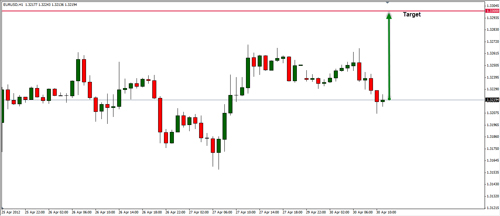
Despite a surprise credit rating downgrade of Spain by Standard & Poor's last week, the Dollar held some ground against the Euro. The Euro touched a 3 week high of $1.3270 on Friday and earlier today had stood at $1.3240.
The 17-nation currency touched the weakest level in almost two years to the pound before the Spanish government holds a media briefing today, where it is expected to explain steps to cut its deficit.
In the next few days, market players will be keeping a close eye on PMI data from China, the Canadian GDP and especially the outcome of a Spanish bond sale on Thursday, where Madrid is looking to raise an estimated 3 billion Euros, and on the upcoming U.S. labor Non Farm Payroll (NFP) release on Friday.
All the best!
Adrian Jones
|





where can i get this?
ReplyDelete